Showing posts with label therapeutic use of self. Show all posts

Wednesday, December 10, 2014

Occupational Therapy Ideas with our WWII Vets

Back to my blog home page: http://travelingotr.blogspot.com


I've had good intentions to write; however, I've been sidetracked. I'm home with my sisters and mom providing care for my father who is on hospice. These times make us ponder how sweet and short and precious life is. We alternate story telling, bursts of silly laughter, tears and moments in which we think we just can't breathe.

We set up the telly in dad's room with a laptop so he can access instant video streaming on Amazon Prime. Band of Brothers was the perfect series to watch, as dad has read a large library worth of WWII books. As we were watching the boys of Easy Company fighting after D Day, we talked about the amazing WWII vets I have had the good fortune to meet and work with over the years.

I decided it's time to write a small piece about ways to address the psychosocial needs of WWII vets through their occupational therapy treatment sessions. Granted, each patient is different. I know that. Every former soldier, however, has some basic needs, whether he speaks them or not.
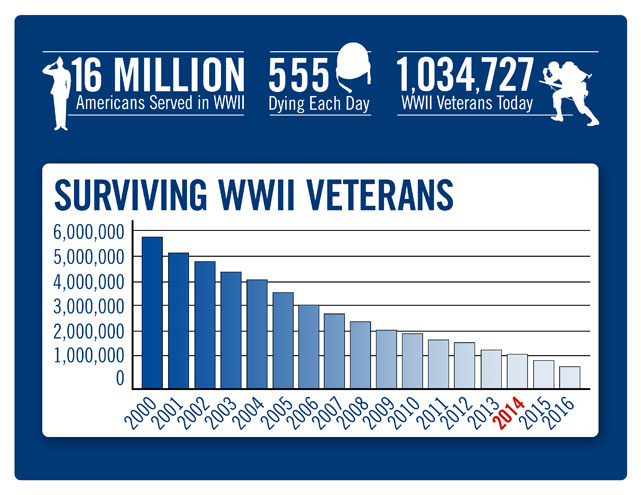
 

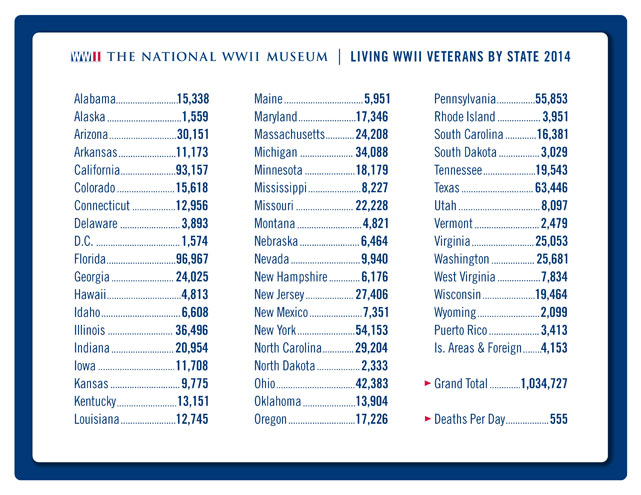
 (Caveat: I'm focusing on WWII because they are leaving this world at a rapid rate and we don't have many of them to appreciate much longer. According to the National WWII Museum website, an average of 555 of them are dying daily.)

How many from your state are still alive?


Photo Credits: National WWII Museum
So, here goes. Here are my thoughts about these (wo)men from the greatest generation:  (for ease here, I will now refer to them as men)

1) When you meet a WWII vet, ask if you can shake his hand. Thank him for his service and for making this world such a better place. If not for them, you never know where we would be.
2) As you work with a vet, begin to ask him generic questions about his experience. If he wants to talk, he will begin to tell you his story. Sometimes, it takes a while to open up. What I have found from an occupational therapy perspective is that we are able to address our vets' personal healing years after the events through reminiscing about the good and the bad that these men experienced in battle. It's not our place to push. I have witnessed vets experience cathartic moments in which they reveal long-held secrets or grief that they have shared with no one, not even their wives or children. Their generation went home, went to work, and did not discuss it.

3) Play period music.  You Are My Sunshine, When You Wish Upon a Star, I've Heard That Song Before, Chattanooga Choo, Swinging on a Star, Sentimental Journey, Frenesi, I'll Never Smile Again, Body and Soul, Paper Doll, Star Dust, and White Christmas were in the top 20 songs of the 1940's during WWII. See which songs lights up his face or brings back memories. Music is an incredible therapeutic medium!

4) With permission, record his story. Better yet, see about getting a group together to record the stories of the WWII vets in your facility or community. The staff of Sno-Isle Libraries in Marysville, WA interviewed their vets and published the audio downloads on this link: CLICK HERE  

If you have questions about how they did it, call them!
360-651-7000 (local) • 877-766-4753 (toll free)
 
 
5) Look into the Veteran's History Project.  It's an amazing initiative to preserve the stories of not just WWII vets, but vets from all wars since WWI.

You can download a VHP Field Kit and Individual Forms and print off information about how to prepare for and conduct the interview. There is even an interview outline you can use to ask the questions.

After the interview, you can send the audio or video to the Library of Congress, where your patients' stories will become part of the Veteran's History Project.

What an amazing way to give back to our soldiers who gave so much of themselves for us....and what a wonderful way for us O.T.s to use our "use of therapeutic self."


Tuesday, May 8, 2012

Moments of Lucidity

Back to my blog home page: http://travelingotr.blogspot.com

So, you know how birds of a feather flock together?


Well, no matter where you go, you can find someone with whom you resonate!

I have been cycling on my way home through the historic Square of this little town in which I am living, and I have discovered an art gallery/coffee house that is open til 8 every night! I am so surprised!

I walked in tonight to a darling place that would rival those in any little American town, with a sizeable contingency of locals chatting with the owner. The art on the walls was captivating. The people were very friendly!
 
I love it that anywhere you go, you can find creative people...
you just have to look!

So, anyway, I am sitting in the coffee shoppe/gallery at this moment drinking an iced chai tea and feeling supremely happy that I have found a new place to spend my early evening hours.  This is just enough to get my creative writing juices going, so watch out!!

I'm also happy because I was inspired today by one of my patients.

I walked into Constance's room, my arms loaded with elbow splints, to reverse her elbow contractures.

I've explained contractures before, but let me tell you what is happening with this patient. Constance has dementia. Many people with dementia simply quit moving. When they quit moving, their muscle tone many times still feels normal, but their tendons become tight and joints become very stiff,  causing a loss of range of motion. You will usually find contracture formation in patients with dementia who experience it in multiple joints, i.e. both knees, both elbows and/or both hands.

Another thing that happens with people with end-stage dementia is that they quit talking. They simply become nonverbal. Constance is not completely nonverbal, but at this point, the other therapists tell me that she just doesn't talk much at all.

Constance was being treated for hand contractures when I arrived, but I discovered when I saw her for the first time that her elbow contractures had not been documented and treated. Hence, the splints.

Back to today...I had seen Constance earlier in the afternoon as the nurse aide wheeled her out of the shower room. She was doing what she does when she is feeling anxiety - breathing in and out quickly and whistling on the intake. I could tell she was stressed. (Check out my former blog entry that includes Bathing Without a Battle).

When it was time for her treatment, I went to her room.  It was time to fit the new elbow splints. I was really hoping that she was going to be relaxed.

Constance was reclined in her lift chair with a neck support


and covered with a colorful afghan, no doubt crocheted by a family member.

isn't that sweet? Makes me want to make one!

Anyway, what was on the tv, but the Ellen show.


I turned to Constance. "Oh, Ellen! Doesn't she just make everyone dance!"

Constance got a huge smile on her face. "Yes!"

I told her what I was going to do next. "Constance, I'm going to pick up your arm, gently shake it until it relaxes a bit and stretch it a bit at the elbow...then I'm going to put on this splint."

"O.K."

And that is what I proceeded to do. Constance and I were both actively interested in Ellen's introduction, during which Ellen revealed that a coveted guest, Johnny Depp, was going to finally be on her show. Of course, Constance didn't know this guy, but guess what?

She knew the older version of the movie he was pitching! Anyone know what it is?

Dark Shadows!


(BTW, Jonathan Frid, the guy who played Barnabas Collins died on Friday, the 13th of April - just a few weeks ago!)

"Constance, do you remember Barnabas Collins?"

"ooohhh, yes!" She was fully engaged!

"I do, too! I remember being about 4 or 5 and watching Dark Shadows when my mom was ironing my dad's work shirts. I was so scared of him!"

"Me, too!"

We went on to talk through the rest of her treatment, and she was able to converse within context and with emotion. She, delightfully, was full of smiles and eye contact.

This was a special day with Constance. These days are few and far between. I was the recipient of a lovely moment in her life. I don't know how much of her response was due to therapeutic use of self (aka bedside manner) or just a good day, but I guess I will find out tomorrow.

My goal is to activate her awareness, to engage her in reciprocal conversation and to even to dig up a few remote memories. If I can do that, it is undoubtedly a successful day.